This post is also available in: 日本語 (Japanese) 한국어 (Korean)
The AI Enterprise Has Arrived
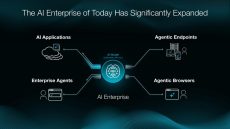
The enterprise is being redefined, not by software alone, but by how work gets done. Enterprise software has evolved from traditional web apps to AI applications and autonomous agentic systems running across cloud and SaaS environments. Developers are using agentic endpoints to build the next generation of AI and agent-driven applications. Employees are using agentic browsers to update records in CRM systems, generate reports, reconcile data across tools and execute workflows across applications, often without switching contexts.
AI is no longer just a tool that employees use; it is an AI Enterprise. It is becoming the digital surface of the enterprise where work is done, decisions are made, and actions are executed increasingly by autonomous systems.
At Palo Alto Networks, we recognized the security implications early.
We are introducing Prisma AIRS® 3.0 – the unified security platform for securing the AI enterprise end to end.
The Security Model of Yesterday Cannot Secure the Enterprise of Tomorrow
Traditional security was built for deterministic software – systems where the same input produces the same output. The AI enterprise is unlike anything we have seen before. Risk no longer lives in one layer. It spans the entire system. Beginning in the AI supply chain, where compromised models, agent code and external context shape behavior before execution. The enterprise then extends to posture risks, with overpermissioned agents operating across environments. It shows up at runtime, where behavior can be redirected midtask. Finally, it breaks down at the identity layer, where agents act with weakly governed, delegated access.
Agents do not operate alone. They orchestrate other agents, where a single failure can cascade across systems. No traditional system deploys this way. Yet this is how agentic AI systems are deployed today.
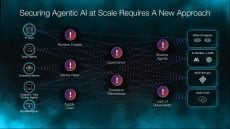
Securing the AI enterprise requires a different approach, built around the full lifecycle of how agents operate: Visibility before control, assessment before deployment, and protection that moves at the speed of execution.
Point solutions cannot solve this. A model scanner finds vulnerabilities but cannot control behavior. A runtime protection tool blocks inputs but cannot govern identity. A posture tool surfaces misconfigurations but cannot manage interactions. What you need is a unified platform built to secure the AI Enterprise, end to end.
Prisma AIRS 3.0 — Security for the AI Enterprise
From the beginning, Prisma AIRS was built to secure AI across its lifecycle. About two years ago we introduced runtime protection for AI applications. 2.0 established more holistic security for AI applications with the inclusion of model security, red teaming and posture management. But the boundary has shifted from applications to agents.
Prisma AIRS 3.0 extends that foundation into the AI enterprise, becoming the industry’s most comprehensive Agent Security Platform, designed for systems that reason, decide and act. It is securing the AI enterprise through a unified approach: Discover, Assess, Protect.
Discover — From AI Apps to the Agentic Surface
Security begins with visibility. But in the AI enterprise, visibility must extend beyond applications.
Prisma AIRS 3.0 expands visibility across the full AI enterprise: Mapping enterprise agents across cloud and SaaS environments, endpoint agents (including vibe coding agents) running on developer systems and browser-based agents. Organizations gain real-time visibility into how these agents operate, surfacing MCP servers, plugins and tool interactions. This brings shadow AI and unsanctioned agents into view, closing one of the largest blind spots in AI adoption.
What was once an inventory of applications is now a live map of autonomous systems operating across the enterprise.
Assess — From Model Risk to Agent Behavior
AI applications introduced new risks. Agents introduce a new class of behavior. Prisma AIRS 3.0 monitors how autonomous systems behave before they act.
Agent Artifact Scanning extends model scanning to agent artifacts, analyzing agent code, MCP servers, as well as skills for unsafe permissions, hidden vulnerabilities and indirect injection paths.
Agent Red Teaming builds on AI Red Teaming with a multiagent architecture that simulates real adversaries, testing how agents behave under conditions, such as tool misuse and manipulated inputs.
Agent Posture Management continuously assesses risk on agents operating across 12 different agentic SaaS and Cloud platforms, providing a real-time understanding of exposure as systems evolve.
This is the shift from identifying weaknesses in components to understanding how entire systems behave under pressure.
Protect — From Runtime Defense to Governance and Control
The defining challenge of the AI enterprise is not detection. It is control – monitoring unsanctioned tool calls, enforcing agent identity, and stopping threats like prompt injection and memory poisoning before they propagate across a swarm.
AI Agent Gateway acts as the control plane for the AI enterprise – governing tool calls, model access and external connections. Every agent interaction is enforced through centralized policies.
Agent Identity Security assigns each agent a governed identity with precise permissions and full traceability, ensuring actions are attributable and enforceable.
Agent Runtime Security extends protection to agent-specific threats, such as tool misuse, memory manipulation, and adversarial instructions, stopping threats as they occur.
Agentic Endpoint Security extends protection to endpoints, governing how agents interact with local systems, files and workflows.
Securing the Core of the AI Enterprise
The AI enterprise cannot be secured with fragmented tools. It requires capabilities, such as visibility across all AI surfaces, continuous assessment of evolving systems, identity and access control over who can act, and real-time control of how actions are executed.
Prisma AIRS 3.0 delivers this as a single platform with a unified control plane that replaces point solutions by bringing together visibility, assessment, identity and runtime enforcement, built for how AI actually operates.
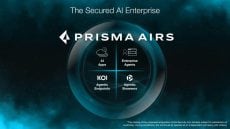
It secures the foundation of the AI enterprise – AI applications and enterprise agents – and extends across agentic endpoints and agentic browsers, covering the full digital surface where autonomous execution is transforming workflows.
Stay tuned as we dive into more details on the Prisma AIRS 3.0 platform.
The AI Enterprise is being built now. See how you can better secure your future with Prisma AIRS, and Deploy Bravely.
Forward Looking Statements
This blog contains forward-looking statements that involve risks, uncertainties and assumptions, including, without limitation, statements regarding the benefits, impact, or performance or potential benefits, impact or performance of our products and technologies or future products and technologies. These forward-looking statements are not guarantees of future performance, and there are a significant number of factors that could cause actual results to differ materially from statements made in this blog, including, without limitation: our pending transaction with Koi and integration of Koi’s business and products; developments and changes in general market, political, economic, and business conditions; risks associated with managing our growth; risks associated with new products and subscription and support offerings; shifts in priorities or delays in the development or release of new offerings, or the failure to timely develop, release and achieve market acceptance of new products and subscriptions as well as existing products and subscription and support offerings; failure of our business strategies; rapidly evolving technological developments in the market for security products and subscription and support offerings; our customers' purchasing decisions and the length of sales cycles; our competition; our ability to attract and retain new customers; and our ability to acquire and integrate other companies, products, or technologies. We identify certain important risks and uncertainties that could affect our results and performance in our most recent Annual Report on Form 10-K, our most recent Quarterly Report on Form 10-Q, and our other filings with the U.S. Securities and Exchange Commission from time-to-time, each of which are available on our website at investors.paloaltonetworks.com and on the SEC's website at www.sec.gov. All forward-looking statements in this blog are based on information available to us as of the date hereof, and we do not assume any obligation to update the forward-looking statements provided to reflect events that occur or circumstances that exist after the date on which they were made.