AI coding assistants are accelerating software development by 17x, yet 45% of AI-generated code introduces security issues. As developers generate more code at greater speed, vulnerabilities, insecure configurations and risky dependencies can enter applications faster than security teams can identify and remediate them.
Traditional shift-left security brought vulnerability detection earlier in development, but it still largely focuses on finding and fixing issues after code is written. As AI agents accelerate code generation, security must extend shift-left practices into the code-generation process itself, helping prevent vulnerabilities from being introduced in the first place.
Introducing Cortex Cloud Integrations with Claude Code and Cursor
Cortex CloudTM brings application security directly into Anthropic’s Claude Code and Cursor, enabling developers to start secure with security best practices and code scanning built into the AI coding process.
Through native integrations powered by the Cortex Cloud AppSec MCP Server and developer tooling, AI coding agents can access enterprise security policies, evaluate software dependencies and run security checks as code is generated. Security becomes part of how code is written, rather than a separate step after development.
Developers can focus on building at the speed of AI without having to manage security as a separate task. By equipping coding agents with security intelligence and guardrails, Cortex Cloud delivers a true secure-by-design approach, helping generate more secure code from the start.
How Cortex Cloud Helps Secure AI-Generated Code
Cortex Cloud brings security into three critical moments of AI-assisted coding, helping prevent insecure code from being generated in the first place.
1. Generate Code Without Security Weaknesses
After a developer submits a prompt, the AI coding agent retrieves Cortex Cloud's SAST secure coding rules through the Cortex Cloud MCP Server before generating code. The agent then applies these rules during code generation to help prevent common software weaknesses (CWEs) from being introduced.
For example, when building an API endpoint, the agent can apply security rules for authentication and input validation to help avoid weaknesses such as improper input validation (CWE-20), rather than relying on scans to catch them later.
2. Prevent Risky Dependencies from Entering Applications
Before installing or importing an open-source package, the AI coding agent uses the Cortex Cloud AppSec MCP Server to check for malicious or suspicious dependencies. If a risk is identified, such as a malicious package impersonating a trusted library, the agent can block installation, explain the risk and recommend a safer alternative, helping prevent compromised dependencies from entering the codebase.
3. Scan Code as It's Written
As AI agents create or modify files, Cortex Cloud automatically runs security checks before and after the agent writes code. These checks identify exposed secrets, vulnerable open-source packages and infrastructure-as-code (IaC) misconfigurations, helping ensure that coding agents don't introduce insecure code into applications.
For instance, if an AI coding agent attempts to write a file containing a hardcoded API key, Cortex Cloud can flag the exposed secret before the file is written. The agent can then remove the credential and retry, with Cortex Cloud scanning the updated code again to verify the issue has been addressed.
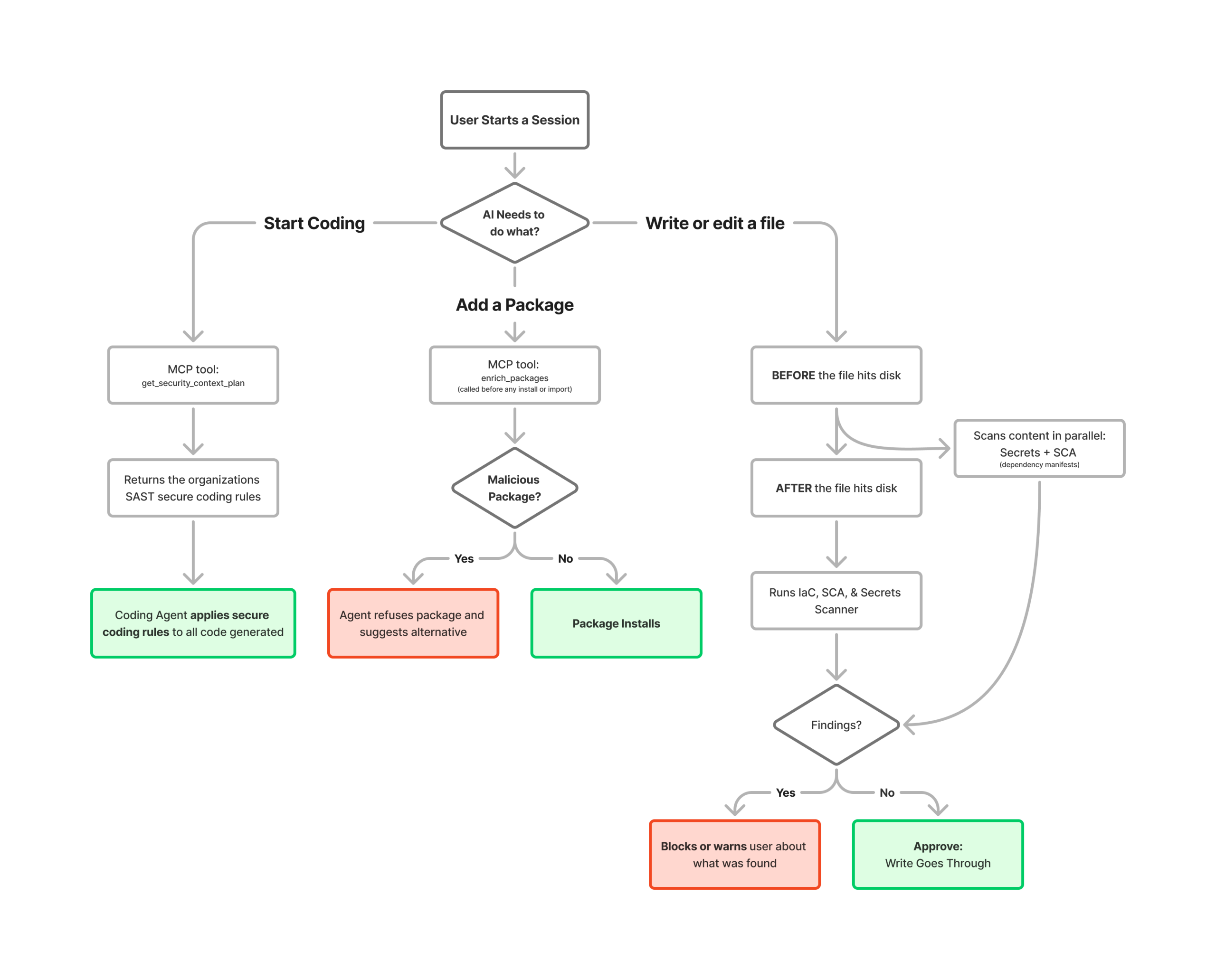
Together, these three capabilities help developers build at the speed of AI with security built into the coding process, while giving AppSec teams a way to extend enterprise security standards across AI-assisted development.
Start Secure with Cortex Cloud
Cortex Cloud's native integrations with Claude Code and Cursor bring enterprise security intelligence and guardrails directly into AI-assisted development, helping developers build faster without having to manage security as a separate step.
Get started with the Cortex Cloud integrations in the Claude plugin directory or Cursor Marketplace, or request a demo to see them in action.